

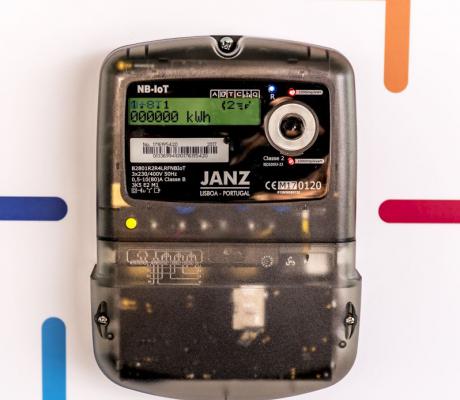
Banebrydende NB-IoT smartmeter pilotprojekt
En af verdens allerførste NB-IoT smartmeter pilotprojekter er skudt i gang i Portugal. Projektet er resultatet af et tæt samarbejde mellem fem førende branceaktører (in english).
Huawei, which has been one of the main contributors towards standardizing NB-IoT technology (4.5G technology), has developed the first NB-IoT Smart Meter in partnership with JANZ CE and u-blox.
EDP Distribuicao is using this technology for a pilot project as part of the UPGRID project of the Horizon 2020 Program of the European Commission. The infrastructure network using NB-IoT technology has been installed by NOS, based on Huawei’s technology. NOS thus becomes the first operator in Portugal to test the 4.5G - IoT technology on its network infrastructure.
This solution combines emerging technologies with the smart metering of electrical energy and with the latest generation networks to oversee the electricity network.
NB-IoT is a Low Power Wide Area (LPWA) wireless access technology, which offers a wide range of advantages, including a battery life of up to 10 years, a gain of 20dB over conventional GSM networks and support more than 100,000 connections per cell.
NB-IoT thus represents a disruptive step on the path towards the Gigabit Society and will evolve over the next few years to 5G (in the field of massive Machine Type Communications) that will support up to 1,000,000 connections per cell.
Based on optimized and bi-directional communication, the value of NB-IoT is recognized worldwide in relation to intelligent networks, and addresses the following challenges:
- Customer satisfaction, through the automatic detection of failures, improving the time needed to restore service. In case of storms or other abnormal situations, quicker detection of the area affected allows teams to be allocated immediately and precisely on the ground for the problem to be resolved rapidly;
- Online measurement of consumption, supporting various values per hour, and a range of energy events and statistics;
- On demand response functionality, based on the installed capacity being managed almost in real time. This function is particularly useful taking into account the ongoing and progressive adoption of electric vehicles and the increasing pace of transition towards renewable sources of electrical energy;
- Continuous development of technology, driven by the potential mass adoption by operators worldwide. This implementation, on a major scale, will ensure a mature eco-system and technological evolution, achieved by perfecting its features and introducing new elements, in accordance with the requirements of the Smart Grid.
The Parque das Nacoes area in Lisbon was chosen by EDP Distribuicao to pilot the project among around 100 customers, until the end this year. This cluster of the city is already covered by NB-IoT and has been equipped with two NOS base stations, which provide NB-IoT coverage. Intelligent energy management in the homes of these customers, who will also play an active role in helping to improve their energy consumption efficiency, represents a relevant practical example for this technology.
Representatives from the companies involved in this ambitious project have highlighted their satisfaction at the challenge involved and its successful completion, which has involved a multi-disciplinary team of scores of people since September 2015.
